Thoughts on "The Year of the Zinc Penny: A Novel"
A story of childhood fear, vampires, and the failure of family.


"[My mother] had a way of expressing herself that was similar to her father's. She just said things, and if there was someone nearby to respond, then something like a conversation would ensue. Like my grandfather, she had a Norwegian fatalism, tough enough to outlast winter... A fatalist believes that nothing can be done, but he will allow himself to be swept along by one cause or another because he believes that being swept along is also something that nothing can be done about."
I stumbled upon Rick DeMarinis at my local library’s book sale almost two years ago. I found three of his books: "Scimitar," "The Burning Woman of Far Cry," and "The Year of the Zinc Penny." I thought the names and covers were interesting and the first few pages of each book led me to believe he wasn't simply some pulp fiction writer, so I took a chance and bought them. I started with this one, being the most popular work on his GoodReads page and because it's the shortest. I'm glad I did. His works have since become some of my favorites and his style has influenced my own more than maybe any other author.
In this story, Rick DeMarinis deconstructs the illusion of the happy American family united by the war efforts. The WWII propaganda pushed a picture of perfect nuclear families uniting in front of steaming hot, red hams and gravy-soaked turkeys in every home. That family is nowhere to be found in "Year of the Zinc Penny."
The story follows a 10 year old boy named Trygve Napoli—an Italian/Norwegian boy who moves out of the foster care system and back in with his mother at the beginning of the story. His biological father is nowhere to be seen and barely mentioned. Instead of the nuclear picture, his family becomes a hodgepodge of apathetic, self-interested characters: his fatalistic mother, his selfish, adulterous stepfather Mitchell, his moon-eyed aunt Ginger, his abusive uncle Gerald, and his depressed cousin William. We get to know these characters intimately during the cramped year they spend in their apartment.
However, we get to know no other character more than Trygve himself who revels in his imagination, often picturing himself as anyone other than who he is, typically a war hero dying in the arms of some beautiful woman. He is impressionable and anxious. DeMarinis nails the fear children feel from simple social interactions better than most I have read. I believe that fear is the strongest emotion a child can feel. It is fear that sticks with us more than any other emotion. Nightmares and shameful social displays particularly plague Trygve. The complex, often vague, internal thoughts of a child are communicated with effective simplicity, often resurrecting my, long forgotten childhood terrors in moments of relation.
Over the course of the book, we see Trygve grow both into a better and worse person depending on the influence. William teaches him to be mean; Mitchell teaches him to worry about his self image; Aunt Ginger teaches him to beware his growing self-consciousness. By the end of the book, Trygve is more confident and more selfish. Personal tragedy, however, undercuts the triumphant feeling Trygve feels as the final page turns.
What stands out to me most about this book are the symbols and motifs employed by DeMarinis. They take the form of Trygve's fixations. My two favorites are Dracula and a young boy named Sylvester Snell—the former of which he sees in a movie and the latter of which sexually assaults him at the beginning of the book. They appear in the dark corners of his room, down empty alleys, and as the villains of his worst nightmares. They are representations of his fears and insecurities. They are tangible, physical threats—like the fear that Dracula will suck his blood—but they also take the form of more existential threats. Trygve often attempts contemplation, searching fruitlessly for connections between death, life, and vampires out loud which earns him the nickname "Monk."
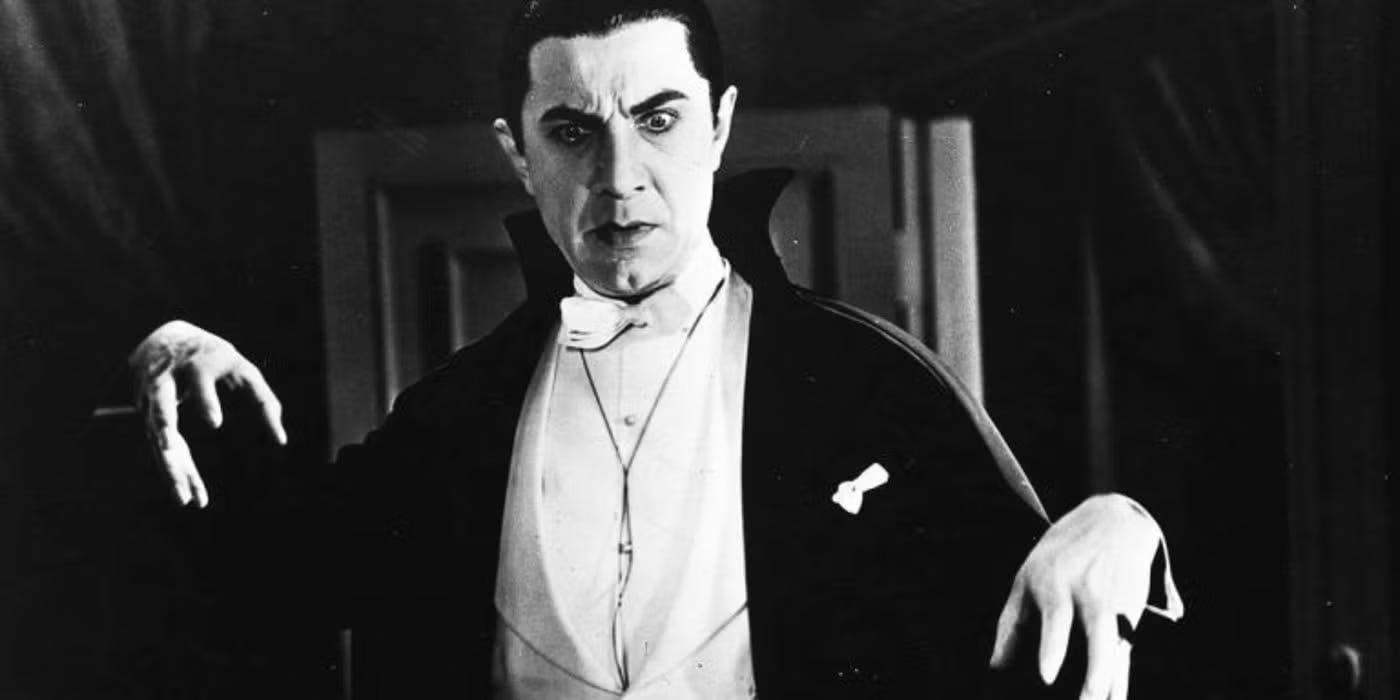
"Kilroy was here. But now he was gone. Like the billions and billions of dead. Faceless, without identity, everywhere. Like the ghost of collective humanity itself. Or like a vampire. It made sense. Kilroy, like the vampire in the Bela Lugosi movies, was the thing that survived after its victims had been bled dry. The live-dead thing that went on and through and on throughout eternity."
I love this book. I love its characters and it's narrative. Even the prose, though fairly objective, is often beautiful. However, I think it fails somewhat in its ending. The ending was hasty, in my opinion. Not every character got an end to their arc in a way that felt satisfying to me. Trygve’s optimism at the end of the book also feels contrived. In my opinion, he should be crushed, not hopeful. If it had been about 50 pages longer then I think the ending would succeed. I also think some of the humor falls flat. William’s fart and “gone with the wind” gag made me cringe every time it happened. And it happens a lot.
In the end, however, I think this book is criminally under-read. It would fit nicely into any high-school or college level American literature class. I can't wait to read more of his work.
"I remembered my dream then. It came to me in clear images, and I saw that it made perfect sense. The Supreme Being was old, too old to keep himself interested in us. Watching over us all through history had made him sleepy and bored. What else could account for the state of the world? Maybe in the days of Adam and Eve he'd been wide awake. In those days everything was new and interesting and he kept tabs on each of us and nothing happened without a good reason."
Why is the goto humor fart jokes when a writer gets lazy? It’s like being 8 again but without the charm.